Detalle de: Developmental Neurobiology Unit
| Title | Developmental Neurobiology Unit |
| Description |
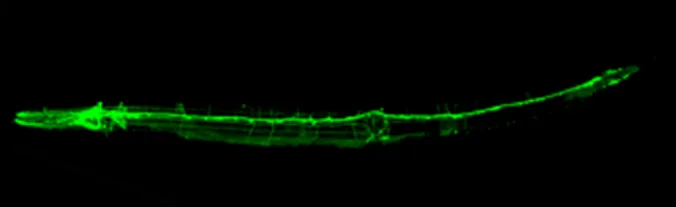
The nervous system is composed by hundreds of different neuron types. The generation of this amazing diversity is tightly regulated during development and mutations in some of the factors that control neuronal specification have been linked to neuropsychiatric disorders. The main interest in our group is to unravel the molecular mechanisms responsible for the generation and maintenance of neuronal diversity. To this aim we combine several animal models and approaches. First, we study the simple model organism C. elegans. The study of this nematode has several advantages: it is simple, fast and easy to handle. Despite its simplicity, C.elegans nervous system is quite complex: it is composed by many different neuron types that utilize the same neurotransmitters as the human brain. To be able to use a given neurotransmitter, the neuron needs to express a battery of genes that allows for the synthesis, release and reuptake of the neurotransmitter, these gene batteries are very well conserved from worms to humans. We reason that, evolutionary conservation might exist not only regarding the neurotransmitter pathways but also in the molecular mechanisms that regulate the expression of these genes. Thus the study of neuronal specification in C.elegans might help us identify factors that control neuronal specification in mammals.
In our lab we focus on two specific neuronal types, the dopaminergic and the serotonergic neurons. Both of these cell types are clinically relevant: dopaminergic neurons control different processes such as motivation, memory, coordination of movement, etc. Besides, Parkinson´s disease is characterized by a selective loss of a dopaminergic neuron subtype. Serotonin is involved in sleep, appetite, mood, etc and serotonin signaling has been implicated in depression and bipolar disorder. Our studies in C.elegans are allowing us to identify the factors that directly regulate the expression of the gene batteries required for the synthesis and use of dopamine and serotonin as neurotransmitters. Using this knowledge we have started exploring the evolutionary conservation of these processes using mice as animal model. Finally, considering the clinical relevance of the dopaminergic and serotonergic neurons, our last goal is to investigate if the mechanisms that regulate serotonergic and dopaminergic differentiation have biomedical applications. We are developing new protocols to differentiate mouse embryonic stem cells towards dopaminergic and serotonergic neurons. We are also studying if mutations in the regulatory sequences that are required for the differentiation of these cell types are linked to depression or bipolar disorders. |
| Home Page | https://www.ibv.csic.es/en/project/developmental-neurobiology/ |
| Contact Email | nflames@ibv.csic.es |
| Collaborating Companies | |
| Spin Off | |
| Patents | |
| Hpc Resources | |
| Institution | IBV |
| Ontology | Model organisms, Gene regulatory networks, Regulatory biology |
| Tools | |
| Service Units | |
| Research Lines | Specification of dopaminergic and serotonergic neurons in C. elegans, Evolutionary conservation of neuronal specification, Biomedical applications of neuronal differentiation |
| Funded Projects | ESPECIFICACIÓN, EVOLUCIÓN Y PLASTICIDAD DE TIPOS NEURONALES CON IMPORTANCIA BIOMÉDICA, Regulatory rules and evolution of neuronal gene expression, Transcriptional regulatory programs controlling neuron morphology and neuronal resilience, Programas de regulación transcripcional asociados a enfermedades genéticas, Estudio de los mecanismos transcripcionales que regulan la diferenciación de las neuronas monoaminérgicas y su conservación evolutiva, Dissecting the gene regulatory mechanisms that generate serotonergic neurons and their link to mental disorders, Dissecting the gene regulatory mechanisms that generate serotonergic neurons |
| Selected Publications |
|
| Researchers | Nuria Flames |