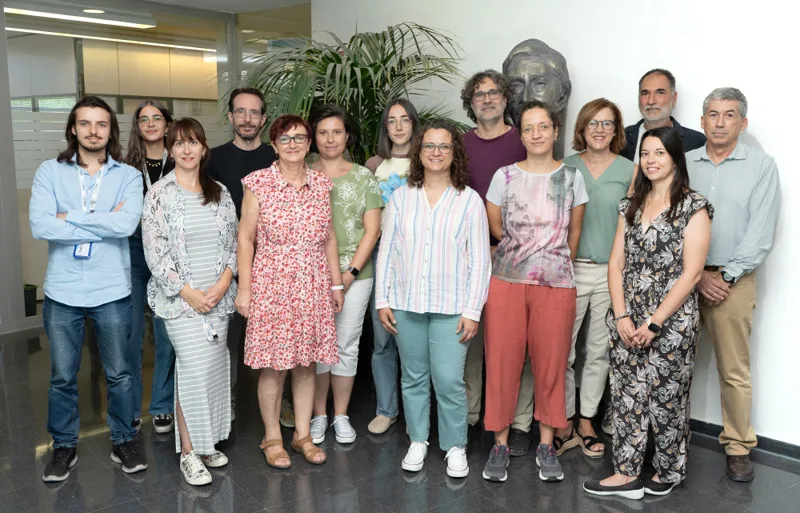
Detalle de: Immunity and Viromics
| Title | Immunity and Viromics |
| Description |
We work on poxvirus proteins that modulate the host immune and inflammatory responses. We are characterizing poxvirus proteins secreted from infected cells that interact with type I interferon, tumor necrosis factor or chemokines, and modulate their activity. We also work on a viral mechanism blocking DNA sensing (poxin/schlafen) that prevents the activation of type I interferon induction. The contribution of these viral proteins to pathogenesis is tested in a mouse model of infection (mousepox). Understanding the mechanism of action of these viral proteins provide information on the function of the immune system and new strategies to control the immune response. We are using this information to develop new anti-inflammatory therapeutic approaches that we may take to the clinic to block inflammatory responses that cause human diseases.
Our projects on viral metagenomics have reconstructed the natural history of ectromelia virus isolates causing mousepox outbreaks in animal house facilities around the world and provided the first genomic sequence from a natural isolate. Studies on herpesviruses showed that herpes simplex virus 1 (HSV-1) and HSV-2 generate greater diversity than expected for DNA viruses. HSV-2, infecting genital mucosa, generates more variants than HSV-1, infecting oronasal mucosa, and this may have contributed to the evolutionary divergence of these viruses adapting to different anatomical niches. We are extending our environmental viral metagenomic projects to the identification of new viruses in Antarctic Dry Valleys, Antarctic and Arctic lake sediments, and water samples from Alpine ecosystems in the Ordesa and Monte Perdido National Park in the Pyrenees. These studies may identify common properties of viruses that inhabit polar and alpine regions, similar extreme ecosystem separated geographically. The COVID19 pandemic has illustrated the importance of airborne virus transmission and the need to improve the microbiological quality of the air. During the COVID19 pandemic we optimized a filtration technology to capture airborne viruses and have used it to monitor the presence of SARS-CoV-2 in the air of hospitals and to sequence complete genomes of viruses present in air samples. We are extending these studies to other human respiratory viruses. Using this technology, we demonstrated the presence of mpox (monkeypox) virus in air samples during the recent 2022 international mpox outbreak, suggesting that airborne transmission may play a role in future outbreaks of mpox. In collaboration with technologists, we are developing new methods to sample airborne viruses and to inactivate viruses in the air. Historical name of the group: Viral Modulation of the Immune Response. |
| Home Page | https://www.cbm.uam.es/index.php/programas-cientificos/interacciones-con-el-entorno/desarrollo-y-funcion-del-sistema-inmunitario/inmunidad-y-viromica/?lang=en |
| Contact Email | aalcami@cbm.csic.es |
| Collaborating Companies | |
| Spin Off | |
| Patents | |
| Hpc Resources | |
| Institution | CBM |
| Ontology | |
| Tools | |
| Service Units | |
| Research Lines | Poxvirus immunomodulatory proteins, Viral metagenomics and virus diversity, Airborne virus detection and inactivation |
| Funded Projects | |
| Selected Publications |
|
| Researchers | Antonio Alcamí, Sergio Sánchez Carrillo |