
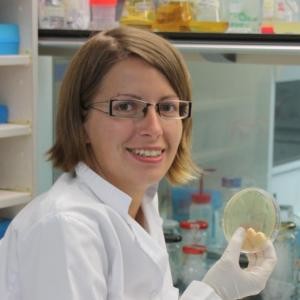
Maria Dzunkova
Microbial Single Cell Genomics · I2SYSBIO
Biography
|
Mária Džunková is an expert in environmental microbiology, mainly employing metagenomics and single cell genomics to discover new microbial lineages and interactions. She started her career at the Czech Academy of Sciences during her undergraduate studies (2005-2010), later obtained her PhD at the University of Valencia (2010-2016), which included a research stay at Harvard (2014). During her postdoc at the Australian Centre for Ecogenomics (2016-2019) she developed the "single-cell viral tagging" method to investigate phage-bacteria interactions in the human gut microbiome. At the DOE Joint Genome Institute at Lawrence Berkeley National Laboratory in California (2016-2021), she developed techniques to discover symbiotic microbes in marine animals that produce bioactive molecules. Since December 2021, she leads the research group Microbial Single-Cell Genomics at I2SysBio and is a lecturer at the University of Valencia. |
Profile
| Institution | I2SYSBIO |
| Position | Principal Investigator |
| Home page | https://www.linkedin.com/in/maria-dzunkova-a03a2443/ |
| Contact email | Maria.Dzunkova@uv.es |
| ORCID | 0000-0002-1765-0697 |
BCB Hub
| BCB Committee | Support BCB Excellence, Teaching links with University |
| BCB Tools | |
| BCB Services |
Research
Research topics
None
Research lines
Projects, networks, transfer & teaching
Teaching
Master programs
- MSc in Bioinformatics - Universitat de València - https://www.uv.es/uvweb/master-bioinformatica/es/master-universitario-bioinformatica-1285885000618.html (BCB coordinator)
Funded projects 8
- Conexión CSIC en Biología Computacional y Bioinformática (BCBHub)
- Environmental Stress Adaptation in Microbial Dark Matter: Extracellular Vesicles versus Phages (DarkWeb)
- Impact of Extracellular Vesicles in the Microbial Dark Matter
- The mobilome of the anaerobic methanotrophic archaea Methanoperedenaceae
View all (4 more)
- Extraction of high molecular weight DNA from nudibranchs
- Microbios previamente desconocidos capaces de adaptarse a la contaminación por cromo hexavalente
- Microbial Single-Cell Genomics
- New culture-independent methodologies for discovering symbiont bacteria of marine soft-bodied animals and their contribution to the chemical defense of their host
Publications 31 entries
- A Resident Prophage Metabolically Reprograms Root-Colonizing Pseudomonas to Modulate Plant Physiology Preprint · 19 Nov 2025
- Combination of Sample Preservation Approaches and DNA Extraction Methods for Long‐Read Sequencing of Nudibranchs' Genomes Article · Apr 2025
- Single-Cell Omics in Microbiome Research Book / chapter · 2025
- Characterization of Microbial Diversity and Mobile Genetics Elements Through Single-Cell Genomics Book / chapter · 2025
- Genomic features of metal-resistant bacteria suitable for tannery effluent bioremediation Article · Dec 2024
View all (26 more)
- Phenotypic characterization for bioremediation suitability of isolates from Southern Tunisian tannery effluent Article · Aug 2024
- The Effect of Cross-Sex Fecal Microbiota Transplantation on Metabolism and Hormonal Status in Adult Rats Article · 2 Jan 2024
- Genomic Analysis, Bioremediation Potential, and Toxicity Removal Efficiency of Metal-Resistant Strains Isolated from Tannery Effluents in Southern Tunisia Preprint · 2024
- Editorial: Advances in viromics: new tools, challenges, and data towards characterizing human and environmental viromes Article · 26 Sep 2023
- Single-Cell Genomics for Uncovering Relationships between Bacteriophages and Their Hosts Book / chapter · 3 May 2023
- Synthase-Selective Exploration of a Tunicate Microbiome by Activity-Guided Single-Cell Genomics Article · 6 May 2021
- Clostridioides difficile Toxin A Remodels Membranes and Mediates DNA Entry Into Cells to Activate Toll-Like Receptor 9 Signaling Article · Dec 2020
- Salivary microbiome composition changes after bariatric surgery Article · 18 Nov 2020
- Insights into the dynamics between viruses and their hosts in a hot spring microbial mat Article · 13 Jul 2020
- Defining the human gut host–phage network through single-cell viral tagging Article · 5 Aug 2019
- Evaluation of a concatenated protein phylogeny for classification of tailed double-stranded DNA viruses belonging to the order Caudovirales Article · 20 May 2019
- Oxidative stress in the oral cavity is driven by individual-specific bacterial communities Article · 27 Nov 2018
- Detection of mixed-strain infections by FACS and ultra-low input genome sequencing Article · 5 Oct 2018
- Flow Cytometry and Direct Sequencing of Viruses Book / chapter · 2018
- The Monoclonal Antitoxin Antibodies (Actoxumab–Bezlotoxumab) Treatment Facilitates Normalization of the Gut Microbiota of Mice with Clostridium difficile Infection Article · 4 Oct 2016
- Active and Secretory IgA-Coated Bacterial Fractions Elucidate Dysbiosis in Clostridium difficile Infection Article · 22 Jun 2016
- Direct sequencing of human gut virome fractions obtained by flow cytometry Article · 8 Sep 2015
- Revealing microbial recognition by specific antibodies Article · 2 Jul 2015
- Selective growth-inhibitory effect of 8-hydroxyquinoline towards Clostridium difficile and Bifidobacterium longum subsp. longum in co-culture analysed by flow cytometry Article · 1 Dec 2014
- Direct Sequencing from the Minimal Number of DNA Molecules Needed to Fill a 454 Picotiterplate Article · 2 Jun 2014
- Genome Sequence of Lactobacillus plantarum 19L3, a Strain Proposed as a Starter Culture for Slovenská Bryndza Ovine Cheese Article · May 2014
- Active and secreted IgA-coated bacterial fractions from the human gut reveal an under-represented microbiota core Article · 17 Dec 2013
- Hybrid Sequencing Approach Applied to Human Fecal Metagenomic Clone Libraries Revealed Clones with Potential Biotechnological Applications Article · 17 Oct 2012
- Characterisation of the Amaranth Genetic Resources in the Czech Gene Bank Book / chapter · 14 Mar 2012
- Intraspecific sequence comparisons reveal similar rates of non-collinear gene insertion in the B and D genomes of bread wheat Article · 2012
- Glutelin protein fraction as a tool for clear identification of Amaranth accessions Article · Mar 2011